
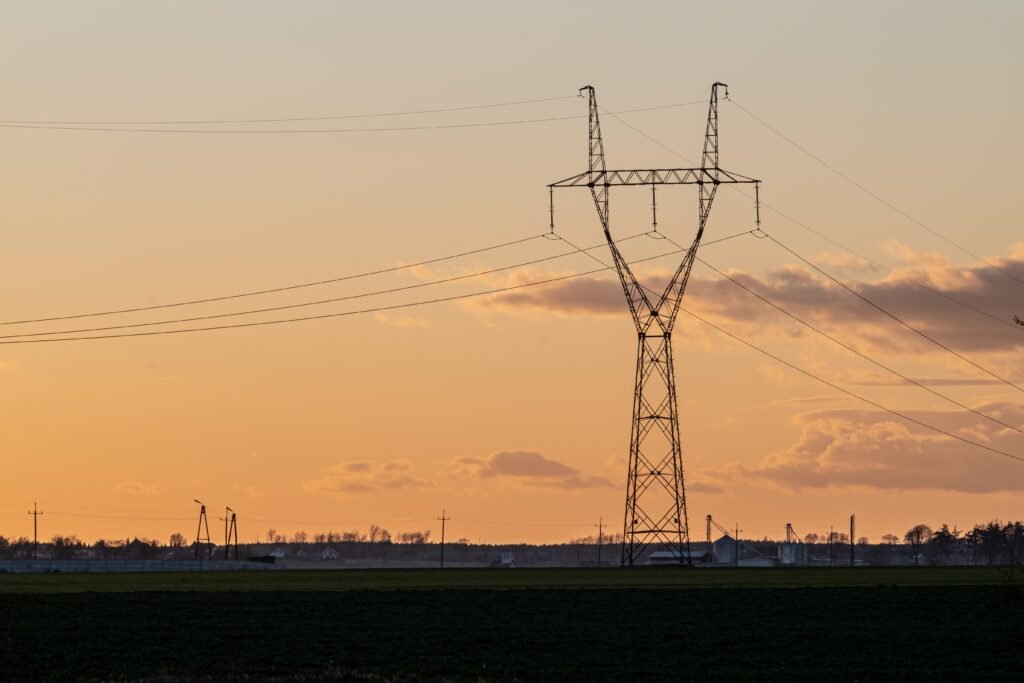
Electrical transmission lines form the backbone of any power system, enabling the transfer of bulk electrical energy from generating stations to substations and distribution networks. In countries like India, where power demand continues to grow across industrial, commercial, and residential sectors, reliable transmission infrastructure is critical. Transmission line projects require precise engineering, strict adherence to standards, and effective project management to ensure safety, quality, and timely completion.
This blog provides a technical overview of the end-to-end execution of electrical transmission line projects, highlighting key stages, challenges, and best practices followed by experienced EPC contractors.
1. Project Planning and Route Survey
The execution of a transmission line project begins with detailed planning and route selection. This phase determines the technical feasibility, cost efficiency, and long-term reliability of the line.
Key activities include:
- Topographical and geographical surveys
- Soil investigation and geotechnical studies
- Route alignment optimization to avoid forests, habitations, and restricted zones
- Identification of river crossings, highways, railways, and special crossings
Advanced tools such as GIS mapping, GPS surveying, and drone surveys are increasingly used to improve accuracy and reduce survey time.
2. Tower Design and Engineering
Based on survey data and electrical parameters, transmission towers are designed to withstand mechanical and environmental loads.
Engineering considerations:
- Line voltage (66 kV, 132 kV, 220 kV, 400 kV, etc.)
- Conductor type and configuration
- Wind load, temperature variation, and seismic zone
- Span length and ground clearance requirements
Tower designs must comply with relevant IS standards, IEC norms, and utility specifications. Structural analysis software is commonly used to ensure strength, stability, and optimization of steel quantities.
3. Foundation Works
Tower foundations play a critical role in the long-term stability of transmission lines. Foundation type depends on soil conditions and terrain.
Common foundation types:
- Open foundations
- Pile foundations
- Rock and hard strata foundations
- Special foundations for swampy or river-crossing areas
Foundation execution includes excavation, reinforcement placement, concreting, curing, and backfilling. Strict quality control of concrete grade, curing time, and reinforcement detailing is essential to avoid future settlement or failure.
4. Tower Erection
Tower erection is carried out after foundations achieve the required strength. Depending on site conditions, towers may be erected using manual, semi-mechanized, or fully mechanized methods.
Erection methods:
- Piece-by-piece erection
- Section-wise erection
- Gin pole or crane-assisted erection
Safety is a major concern during this stage. Proper use of PPE, certified lifting tools, and trained manpower is mandatory to prevent accidents.
5. Conductor Stringing and Sagging
Conductor stringing is a technically critical phase that directly affects the electrical and mechanical performance of the transmission line.
Key steps include:
- Installation of stringing blocks and pilot wire
- Tension stringing of conductors using winches
- Controlled sagging as per approved sag-tension charts
- Clipping-in and installation of spacers and vibration dampers
Stringing must be carried out under suitable weather conditions to avoid damage to conductors and maintain specified clearances.
6. Insulator and Hardware Installation
Insulators and line hardware ensure electrical insulation and mechanical support of conductors.
Types commonly used:
- Disc insulators (porcelain or glass)
- Composite polymer insulators
- Suspension, tension, and angle assemblies
All hardware fittings must be installed as per approved drawings and torque specifications to ensure long-term reliability.
7. Testing and Commissioning
Before energization, thorough testing and inspection are carried out to confirm the safety and readiness of the line.
Pre-commissioning checks include:
- Visual inspection of towers, conductors, and fittings
- Measurement of conductor sag and ground clearance
- Continuity and joint checks
- Earth resistance measurement
Only after successful completion of tests and approval from the concerned authority is the line charged and commissioned.
8. Quality, Safety, and Compliance
Transmission line projects are governed by strict quality and safety requirements. Experienced EPC contractors implement QA/QC systems and safety management plans throughout the project lifecycle.
Key focus areas:
- Compliance with statutory regulations and client specifications
- Regular site inspections and audits
- Training of workforce on safety practices
- Zero-accident and zero-defect execution philosophy
9. Challenges in Transmission Line Projects
Despite careful planning, transmission projects face several challenges such as:
- Difficult terrain and remote locations
- Right-of-way (ROW) constraints
- Adverse weather conditions
- Coordination with multiple stakeholders
Successful execution depends on technical expertise, strong project management, and proactive risk mitigation strategies.
Conclusion
Electrical transmission line projects require a seamless integration of engineering, construction, quality control, and safety management. From route survey to final commissioning, each stage demands precision and adherence to technical standards. With increasing power demand and expansion of renewable energy, the importance of reliable transmission infrastructure continues to grow.
Choosing an experienced EPC partner with proven technical capability ensures timely delivery, operational reliability, and long-term asset performance.