
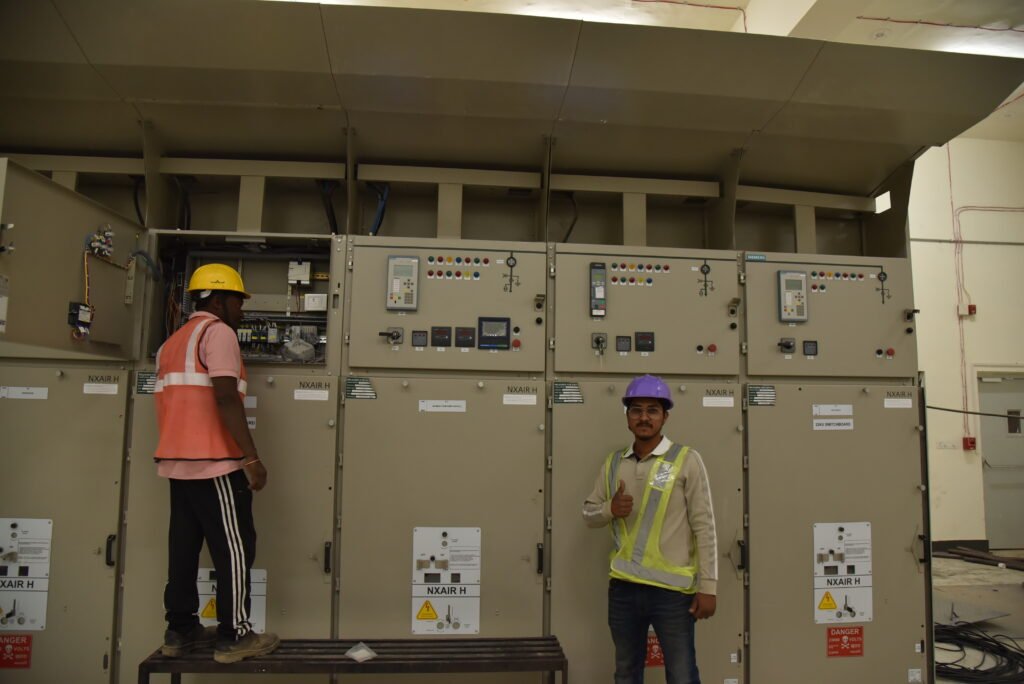
Electrical installations form the foundation of safe and reliable power systems in residential, commercial, and industrial projects. Even minor errors during installation can lead to serious consequences such as electrical shocks, equipment failure, fire hazards, and unplanned downtime. Many of these issues arise not due to complex technical failures, but because of avoidable mistakes during planning, execution, or inspection.
This blog highlights the most common electrical installation mistakes and explains how to avoid them through proper design, workmanship, and adherence to standards.
1. Improper Cable Sizing
One of the most frequent mistakes in electrical installations is selecting incorrect cable sizes.
Why it happens:
- Inadequate load calculation
- Cost-cutting during material selection
- Lack of consideration for future load expansion
Risks:
- Cable overheating
- Voltage drop
- Reduced equipment life
- Fire hazards
How to avoid:
Always perform detailed load calculations considering diversity factors and future expansion. Select cables as per relevant IS standards, accounting for installation conditions, ambient temperature, and voltage drop limits.
2. Poor Earthing and Grounding Practices
Earthing is critical for electrical safety, yet it is often poorly executed or neglected.
Common issues:
- High earth resistance values
- Improper bonding of equipment
- Use of undersized earth conductors
Risks:
- Electric shock hazards
- Failure of protective devices
- Damage to equipment during faults
How to avoid:
Design earthing systems as per standards, ensure low earth resistance, and conduct regular earth resistance testing. All metallic enclosures and structures must be properly bonded.
3. Incorrect Circuit Protection Selection
Using the wrong type or rating of protective devices is a serious installation error.
Typical mistakes:
- Oversized MCBs or MCCBs
- Absence of RCCBs or ELCBs
- Improper coordination between protection devices
Risks:
- Failure to trip during faults
- Equipment damage
- Increased fire risk
How to avoid:
Select protection devices based on load, fault levels, and coordination requirements. Use RCCBs for personnel protection and ensure proper discrimination between upstream and downstream devices.
4. Loose or Improper Electrical Connections
Loose connections are a hidden but dangerous issue in electrical systems.
Causes:
- Inadequate tightening
- Poor workmanship
- Use of incorrect lugs or terminals
Risks:
- Localized heating
- Arcing and sparking
- Fire hazards and system failures
How to avoid:
Use proper crimping tools, torque-tighten connections as per manufacturer recommendations, and conduct periodic thermal scanning to detect hot spots.
5. Overcrowding of Panels and Cable Trays
Electrical panels and cable trays are often overcrowded due to poor planning.
Problems caused:
- Poor heat dissipation
- Difficulty in maintenance
- Increased risk of short circuits
How to avoid:
Design panels with sufficient spare capacity and ensure adequate spacing. Follow derating guidelines and provide proper ventilation for heat dissipation.
6. Inadequate Segregation of Power and Control Cables
Mixing power and control cables is a common installation mistake.
Issues:
- Electrical interference
- Signal disturbances
- Reduced system reliability
How to avoid:
Route power and control cables separately, use dedicated trays, and maintain minimum separation distances as per standards. Shielded cables should be used where required.
7. Ignoring Electrical Drawings and Documentation
Deviation from approved drawings often leads to installation errors.
Consequences:
- Mismatched connections
- Overloaded circuits
- Difficulty during commissioning and maintenance
How to avoid:
Always follow approved electrical drawings and single-line diagrams. Any changes must be properly reviewed, approved, and documented as “as-built” drawings.
8. Poor Quality of Materials and Components
Using substandard materials compromises safety and reliability.
Examples:
- Low-quality cables
- Non-certified breakers
- Inferior accessories
How to avoid:
Procure materials from approved manufacturers only and verify test certificates. Ensure all components meet relevant IS/IEC standards.
9. Lack of Testing and Inspection Before Energization
Skipping pre-commissioning tests is a major oversight.
Commonly skipped tests:
- Insulation resistance tests
- Continuity checks
- Earth resistance measurement
How to avoid:
Implement a structured testing and commissioning checklist. Energize systems only after all test results meet acceptable limits and approvals are obtained.
10. Inadequate Training and Supervision
Untrained manpower is a root cause of many installation errors.
Risks:
- Unsafe practices
- Poor workmanship
- Increased accident rates
How to avoid:
Deploy trained and authorized electricians, conduct regular tool-box talks, and ensure proper supervision by qualified engineers.
Conclusion
Most electrical installation failures are preventable through proper planning, skilled workmanship, and strict adherence to standards. Avoiding common mistakes such as improper cable sizing, poor earthing, and inadequate protection ensures safer, more reliable electrical systems.
Investing in quality installation practices not only improves safety but also reduces maintenance costs and enhances the overall performance of electrical infrastructure.